
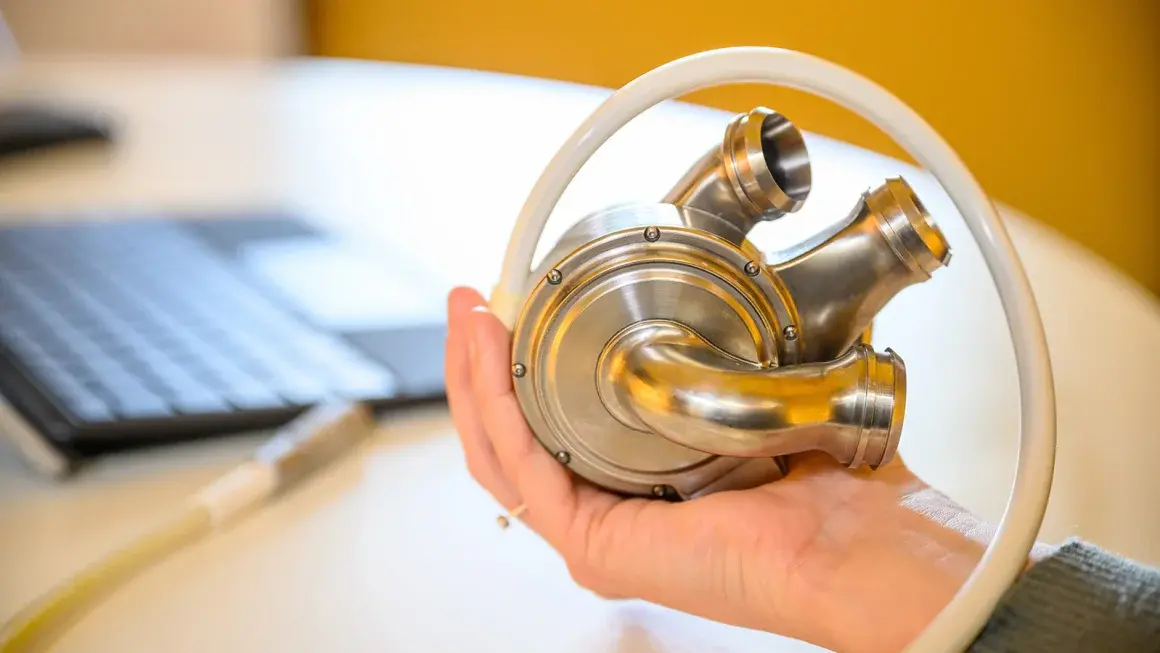
According to a joint statement from St. Vincent’s Hospital, Monash University, and BiVACOR—the US-Australian company behind the device—the patient, who had severe heart failure, is now “recovering well.” The success of this case is being hailed as a major step toward making artificial hearts a viable long-term solution for patients suffering from heart failure. However, the device is still in the trial phase and has not yet been approved for general use.
A Decades-Long Vision Comes to Life
The BiVACOR Total Artificial Heart (TAH) was developed by Australian bioengineer Daniel Timms, who was inspired by his father’s death from heart disease. Reflecting on the milestone, Timms described it as “exhilarating to see decades of work come to fruition.”
“The entire BiVACOR team is deeply grateful to the patient and his family for placing their trust in our Total Artificial Heart,” he said. “Their bravery will pave the way for countless more patients to receive this lifesaving technology.”
How the Artificial Heart Works
The BiVACOR TAH is a compact, fully implantable device with a single moving part: a levitated rotor suspended by magnets. Unlike traditional mechanical hearts, it has no valves or bearings that can wear out over time. Constructed from titanium, the device efficiently pumps blood to both the lungs and the body, replacing the function of the heart’s ventricles.
Heart disease remains the world’s leading cause of death, claiming approximately 18 million lives each year, according to the World Health Organization. The long-term goal of the artificial heart is to serve as a lifeline for patients stuck on waiting lists for donor transplants. In 2024 alone, about 3,500 people in the U.S. received heart transplants, while 4,400 new patients joined the waiting list.
A New Era for Heart Transplants
Professor Chris Hayward of the Victor Chang Cardiac Research Institute believes the BiVACOR heart could revolutionize the field.
“Within the next decade, we will see the artificial heart becoming the alternative for patients who are unable to wait for a donor heart or when a donor heart is simply not available,” said Hayward, who is overseeing the Australian patient’s recovery and played a key role in preparing the device for clinical trials.
The device has already been tested in the U.S. as part of the Food and Drug Administration’s Early Feasibility Study. Five patients have received the implant so far. The first trial took place last July at Texas Medical Center, where a 58-year-old man with end-stage heart failure survived for eight days with the device before receiving a donor heart. Four more patients have since been implanted as part of the study, which aims to assess the device’s safety and performance. The trial is expected to expand to 15 patients.
Australia’s Role in Advancing Artificial Heart Technology
The Australian implant is the first of many planned as part of Monash University’s Artificial Heart Frontiers Program. This AU$50 million (US$31 million) initiative is dedicated to developing and commercializing three innovative devices to treat heart failure.
As research and trials continue, the success of the BiVACOR heart offers hope that artificial hearts could soon become a standard treatment option, bridging the gap for patients in desperate need of a transplant.